Three Strategies to Keep Your Training on Track This Holiday Season

The stretch from Thanksgiving to New Year’s is one of the toughest times of year for endurance athletes. Schedules get messy, routines fall apart, and motivation takes a hit. But losing fitness isn’t inevitable. With a realistic plan, a focus on the essentials, and a few key non-negotiables, you can maintain momentum through the holidays and roll into January ready to build—not rebuild.

Continue reading

SoS Gravel Collective 2026

The SOS Gravel Collective RETURNS for 2026!

WHAT IS the SoS GRAVEL COLLECTIVE?

Founded in 2011, the Science of Speed community is united by athletes supporting one another and finding joy in endurance sports. More than going fast, SoS GRAVEL COLLECTIVE focuses on meaningful connections, encouraging one another on and off the bike, and fostering a positive, uplifting environment where all levels feel welcome and motivated. With Science of Speed’s innovative coaching, top-level bike fit, research-grade laboratory, and world-class partners, it is an unmatched experience for athletes. Want a supportive community enthusiastic about gravel? Apply to join the SoS family. A great team requires great people.

SoS COLLECTIVE BENEFITS

Exclusive Custom Gear: You will have access to premium, custom-designed SoS COLLECTIVE cycling gear, perfect for both training and racing.

SoS COLLECTIVE Community: Connect with fellow athletes through regional COLLECTIVE gatherings, race meet-ups, training camps, social rides, and events.

Discounts with Science of Speed: Enjoy savings on Science of Speed services.

Partner Perks: We offer special discounts and offers with our top-tier partners, featuring the best brands and services in the industry.

GENERAL QUESTIONS

How do I apply?

2026 SoS COLLECTIVE applications will open from December 1st-21st 2025. Follow @science_of_speed on Instagram for the latest news. 

When will I know if I made the team?

We will email you by December 22nd, 2025, to let you know whether you have been accepted.

Is the SoS COLLECTIVE only available in the U.S.A.?

The application on this site is for USA residents only.

What does it cost to join SoS COLLECTIVE?

There are no membership fees for joining the SoS COLLECTIVE. As a team member, you must race in team gear, which is available for preorder in January. You must purchase either a Speed suit or Jersey & shorts/bibs. All items on the team store will be available at our cost. You can purchase as much or as little additional custom items from the team store at that time. Each member of the SoS COLLECTIVE must be coached by a Science of Speed coach. Don’t worry; we are taking VERY good care of your wallet and of you as an athlete.

What are the perks of being part of SoS COLLECTIVE?

  • Custom COLLECTIVE-only cycling gear at a deep discount. 

  • A significant discount on SoS Coaching. This is a requirement to be a part of the SoS COLLECTIVE and is why there are limited spots available.

  • We offer COLLECTIVE-only discounts with our partner brands. Although you are not required to race with affiliated partner gear or nutrition, we have the best partners in the industry, and we are confident you will want to use their products. 

What does Science of Speed expect from you as a COLLECTIVE member?

  • Introduce the sport of gravel to at least one new person. You can bring a friend or family member who has never participated in a gravel event. You can encourage someone to toe the line. The possibilities are endless when you love the sport and want to share it with others.  

  • Plan to race at least 2 of our 3 selected events throughout the 2024 season

  • Race exclusively in the SoS COLLECTIVE KIT (we do have exceptions for local events where you want to race in your local club kit).

  • We do require an Instagram or Facebook account. Follow Science of Speed on Instagram and Facebook, and tag #SoSCOLLECTIVE & #SoSathlete

  • Encourage and be respectful of other athletes

  • THANK the volunteers!

  • MOST IMPORTANTLY, SMILE AND HAVE FUN! You are “NEVER too pro to wave!”

What kind of athlete is Science of Speed looking for?

We are looking for athletes who enjoy the journey and are passionate about gravel cycling. Whether you race or you are looking to complete your first event, it’s showing up and exuding a positive attitude that counts. 

Do I need to be fast or podium to be on the team?

No, you do not need to be speedy or place on the podium in races. It is more important to us at Science of Speed that you love cycling, especially gravel, and want to share your passion for the sport with others. COLLECTIVE members encourage others on and off the course! 

How big is the SoS COLLECTIVE?

SoS COLLECTIVE is a small, tight-knit group of athletes. We believe that maintaining lower-than-industry-standard athlete numbers best maintains the quality of our coaching and creates a stronger community on and off the race course. 

Who are the SoS COLLECTIVE Partners?

We support brands that uphold the same high standards and quality we expect from our own services and, where applicable, are based on scientifically sound research. 

Can I be on another brand’s team?

We ask that you choose to represent Science of Speed, and only to represent Science of Speed for coaching, bike fits and testing.

Can I be on a local team/club?

Yes, we encourage you to be involved in your local community. We ask that you wear your SoS COLLECTIVE kit when racing outside your club events. 

TEAM STORE QUESTIONS

When will the 2026 SoS Collective gear I ordered be shipped?

Our gear is ordered directly through Jakroo and is usually completed and shipped within 3 weeks of order close.


Do I need to race in the team kit?

You must race in the 2026 COLLECTIVE kit if you are racing a gravel event. If you are doing any other race, we would love for you to represent; however, it is not mandatory. Failure to follow this policy may result in you not being invited back for the next season.


What happens if you decide to order more gear after the store closes?

Whether you want more apparel to train in, hit the deck, or simply log so many miles that you wear out your team kit, let us know, and we will provide you with  a new order link.


What if the 2026 GRAVEL COLLECTIVE gear I ordered doesn’t fit?

Before ordering, we recommend that all COLLECTIVE members use Jarkoo’s size guide. This guarantees your gear will fit; if it doesn’t, they will replace it. If you choose not to use this, we cannot guarantee you will not be required to order a new team kit.

DISCOUNT QUESTIONS

 What are the SoS Collective partner discounts?

After the team roster is determined, an email with COLLECTIVE discount information will be sent. These codes are confidential and for your personal use only. Abusing them will result in disqualification from the team.

Can I share my SoS COLLECTIVE discounts with my family/friends?

No. We work with partners to secure very generous discounts for you. Please do not share discount codes or request them on social media.  

Creatine for Endurance Athletes: What the Science Says

Text image reading ‘Creatine. For endurance athletes?’ highlighting supplement benefits for cycling, running, and endurance sports.

Creatine isn’t just for bodybuilders. Endurance athletes—from cyclists and triathletes to motocross riders—are discovering its benefits for performance, recovery, and even mental health. While creatine won’t boost your VO₂ max, it can improve your ability to handle surges, sprints, and climbs, all while supporting faster recovery between training sessions. Current research also suggests creatine may play a role in cognitive function and mood regulation, adding another layer of potential benefit. In this article, we break down what the science really says about creatine for endurance athletes, how it impacts recovery, and the best way to use it—dosage, timing, and all.

Continue reading

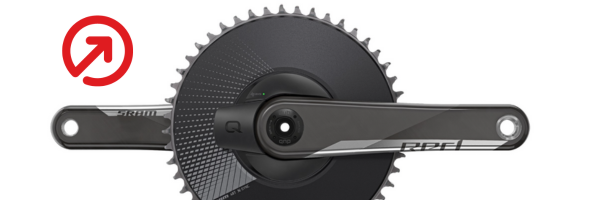
Crank Length: Does It Really Matter?

For decades, cyclists and fitters alike have treated crank length as sacred—often dictated by outdated rules or assumptions that “taller riders need longer cranks.” But recent research paints a very different picture—one that challenges conventional wisdom and brings the focus back to function over tradition.

Myth: Longer Cranks = More Power

At face value, the idea that longer cranks generate more leverage and therefore more power seems logical. But Martin and Spirduso (2001) debunked this in a landmark study where cyclists rode with crank lengths ranging from 120 mm to 220 mm. They found that maximum power output remained unchanged across crank lengths between 145 and 195 mm—a surprisingly wide “neutral zone” with no performance loss.

More recently, Burrus et al. (2021) tested novice cyclists using 145 mm and 175 mm cranks. Riders using the shorter cranks produced 3–5.5% more power at the same oxygen cost—indicating improved efficiency, not just mechanical leverage.

No Major Differences in Joint Power, but Big Differences in Fit

Barrett et al. (2011) and Barratt et al. (2016) explored crank lengths from 150 mm to 190 mm and found no significant difference in hip, knee, or ankle power contribution. However, longer cranks did increase joint range of motion, particularly at the hips and knees. This matters, especially in aero positions where hip closure can restrict breathing, reduce glute recruitment, and cause discomfort or injury.

A 2023 study using statistical parametric mapping (SPM) confirmed that shorter cranks reduce excessive knee and pelvic motion, promoting a more stable and efficient pedal stroke.

Crank Length and Efficiency

From an aerobic perspective, research continues to show crank length has little to no effect on oxygen consumption or heart rate at submaximal efforts. Whether you’re using 165 mm or 175 mm cranks, your engine runs just as efficiently, assuming cadence remains consistent.

For time trialists, triathletes, and riders seeking a more aggressive position, shorter cranks help open the hip angle, improve comfort, and reduce the risk of overuse injuries—without sacrificing performance.

Real-World Trends

Many pro cyclists are shifting toward shorter cranks—not to gain watts, but to reduce joint strain and allow for more aerodynamic positioning. At the 2025 Tour de France, 160–165 mm cranks were increasingly common in the peloton, even among taller riders (Cycling Weekly, 2025).

Practical Takeaways

So, should you change your crank length? Here’s what the science suggests:

  • Stick with what works if you’re comfortable and performing well in the 170–175 mm range.
  • Go shorter if you’re experiencing hip, knee, or low back discomfort—especially in aero setups.
  • Don’t chase leverage—you won’t gain power with longer cranks, but you may sacrifice joint health and positioning.
  • Fit always comes first. Crank length should complement—not compromise—your position, flexibility, and performance demands.

Final Word

Crank length isn’t a magic bullet. But when dialed in properly, it can significantly improve your comfort, biomechanics, and long-term durability on the bike. If you’re unsure whether your setup is optimized, a professional bike fit may be the smartest investment you can make in your training and performance.


References

  • Martin JC, Spirduso WW. (2001). Determinants of maximal cycling power: crank length, pedaling rate, and pedal speed.
  • Burrus B, Armendariz M, Moscicki T. (2021). Shorter crank lengths improve cycling performance in novice cyclists. J Strength Cond Res.
  • Barrett RS et al. (2011). Crank length does not influence joint-specific power during submaximal cycling.
  • Barratt PR et al. (2016). Influence of crank length on cycling biomechanics.
  • Cycling Weekly. (2025). Five tech trends from the 2025 Tour de France.
  • SPM Study: PubMed ID 40464620

Are You Carb Over-Loading?

In recent years, the endurance sports world has embraced a growing trend: pushing carbohydrate intake higher and higher. From group rides to Ironman events to the Tour de France, athletes are now reporting intakes of 180 to 220 grams of carbohydrate per hour—a massive leap from previous guidelines.

But here’s the critical question: Do you actually need that much?

The Rise of High-Carb Racing

The shift toward extreme fueling strategies has largely been driven by elite-level data. We now understand that the gut, like any other physiological system, can be trained to absorb more carbohydrates. Elite athletes in long events are pushing boundaries, with measurable performance gains.

Take Stage 9 of the 2025 Tour de France, where Jonas Rickaert rode nearly 3.5 hours at an average of 356 watts. His total caloric expenditure? Roughly 4,900 kcal. Even assuming 40% of that energy came from fat, that still leaves around 2,900 kcal from carbohydrate—or ~200 grams of CHO per hour. In that context, his fueling needs make complete sense.

But here’s the problem: Most athletes aren’t Jonas Rickaert.

The Above-Average Cyclist

Let’s compare Rickaert’s numbers to those of an “above-average” amateur cyclist—someone with a 4.0 W/kg FTP, likely a strong contributor on local group rides, capable of maintaining steady efforts, but not elite. If this rider goes out for a 3.5-hour ride, their average power might sit around 190 watts, leading to an energy expenditure of approximately 2,600 kcal.

Using the same assumption—40% fat, 60% carbohydrate—this rider would require roughly 1,560 kcal from carbohydrate over the session. That breaks down to ~110 grams of carbs per hour—and that’s if they aim to fully replenish all carbs burned, which isn’t always necessary or even feasible.

If the rider is less fit, the power drops, the calorie burn drops, and the carb need drops even further.

One Size Doesn’t Fit All

Here’s the issue: much of the advice being circulated today is based on what elite athletes are doing. But for most amateur cyclists, runners, or triathletes, those needs simply don’t align with their energy expenditure. High-carb fueling has its place, especially in racing and high-intensity sessions, but blindly chasing 120+ grams per hour can lead to unnecessary gut distress, weight gain, or just wasted effort.

Fueling Smarter, Not Just More

Before adopting elite-level fueling, consider these three critical variables:

  1. Total Energy Expenditure – Are you burning 5,000 kcal on your ride… or 2,000?
  2. Intensity of Effort – Higher intensity = greater carb reliance. But at endurance pace (Zone 2), fat can cover 35–55% of energy needs.
  3. Fueling Goals – Are you trying to maximize performance, or just complete the session feeling strong?

For many athletes, aiming for 60–90g of carbs per hour is both practical and effective. Jumping to 100+ g/hr should only happen after considering workload and practicing gut tolerance.

Carb Type & Delivery Matter, Too

If you’re struggling with GI issues at higher intakes, it may not be the quantity—but the form. Liquids and gels are generally absorbed faster than solids or semi-solids. Likewise, combining multiple carb sources (e.g., glucose + fructose) can improve absorption rates and reduce GI distress.

The Bottom Line

Elite athletes have exceptional fitness, metabolic flexibility, and massive energy demands. Their fueling needs are not representative of the average cyclist or runner. Yes, it’s exciting to see what’s physiologically possible—but it’s a mistake to blindly copy their strategies without considering your own needs.

Instead, evaluate your output, test what works, and fuel with purpose. The body is trainable—but it’s also unique. Train your gut, track your workload, and align your carbohydrate intake with your actual performance demands, not just what’s trending.

Are you uncertain about how to fuel and how many calories you actually need during your workouts? Let one of our coaches help you understand and dial in your nutrition plan.

View the FULL RECAP on our YouTube channel!

Max Effort, Min Health: The Downsides of Going All-Out in Exercise

Feeling sore and exhausted after every workout? It might be time to reconsider your approach for better health, performance, and longevity. High-intensity exercise can suppress immune function, increase the risk of illness, and lead to burnout. Personalized high-intensity workouts are often more beneficial, considering individual fitness levels and goals. Read the full article to learn more about these three important aspects and how to optimize your workouts.

Continue reading