
Crank Length: Does It Really Matter?
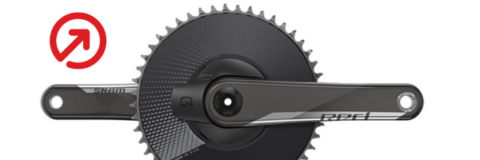
For decades, cyclists and fitters alike have treated crank length as sacred—often dictated by outdated rules or assumptions that “taller riders need longer cranks.” But recent research paints a very different picture—one that challenges conventional wisdom and brings the focus back to function over tradition.
Myth: Longer Cranks = More Power
At face value, the idea that longer cranks generate more leverage and therefore more power seems logical. But Martin and Spirduso (2001) debunked this in a landmark study where cyclists rode with crank lengths ranging from 120 mm to 220 mm. They found that maximum power output remained unchanged across crank lengths between 145 and 195 mm—a surprisingly wide “neutral zone” with no performance loss.
More recently, Burrus et al. (2021) tested novice cyclists using 145 mm and 175 mm cranks. Riders using the shorter cranks produced 3–5.5% more power at the same oxygen cost—indicating improved efficiency, not just mechanical leverage.
No Major Differences in Joint Power, but Big Differences in Fit
Barrett et al. (2011) and Barratt et al. (2016) explored crank lengths from 150 mm to 190 mm and found no significant difference in hip, knee, or ankle power contribution. However, longer cranks did increase joint range of motion, particularly at the hips and knees. This matters, especially in aero positions where hip closure can restrict breathing, reduce glute recruitment, and cause discomfort or injury.
A 2023 study using statistical parametric mapping (SPM) confirmed that shorter cranks reduce excessive knee and pelvic motion, promoting a more stable and efficient pedal stroke.
Crank Length and Efficiency
From an aerobic perspective, research continues to show crank length has little to no effect on oxygen consumption or heart rate at submaximal efforts. Whether you’re using 165 mm or 175 mm cranks, your engine runs just as efficiently, assuming cadence remains consistent.
For time trialists, triathletes, and riders seeking a more aggressive position, shorter cranks help open the hip angle, improve comfort, and reduce the risk of overuse injuries—without sacrificing performance.
Real-World Trends
Many pro cyclists are shifting toward shorter cranks—not to gain watts, but to reduce joint strain and allow for more aerodynamic positioning. At the 2025 Tour de France, 160–165 mm cranks were increasingly common in the peloton, even among taller riders (Cycling Weekly, 2025).
Practical Takeaways
So, should you change your crank length? Here’s what the science suggests:
- Stick with what works if you’re comfortable and performing well in the 170–175 mm range.
- Go shorter if you’re experiencing hip, knee, or low back discomfort—especially in aero setups.
- Don’t chase leverage—you won’t gain power with longer cranks, but you may sacrifice joint health and positioning.
- Fit always comes first. Crank length should complement—not compromise—your position, flexibility, and performance demands.
Final Word
Crank length isn’t a magic bullet. But when dialed in properly, it can significantly improve your comfort, biomechanics, and long-term durability on the bike. If you’re unsure whether your setup is optimized, a professional bike fit may be the smartest investment you can make in your training and performance.
References
- Martin JC, Spirduso WW. (2001). Determinants of maximal cycling power: crank length, pedaling rate, and pedal speed.
- Burrus B, Armendariz M, Moscicki T. (2021). Shorter crank lengths improve cycling performance in novice cyclists. J Strength Cond Res.
- Barrett RS et al. (2011). Crank length does not influence joint-specific power during submaximal cycling.
- Barratt PR et al. (2016). Influence of crank length on cycling biomechanics.
- Cycling Weekly. (2025). Five tech trends from the 2025 Tour de France.
- SPM Study: PubMed ID 40464620